By Jada Turner //
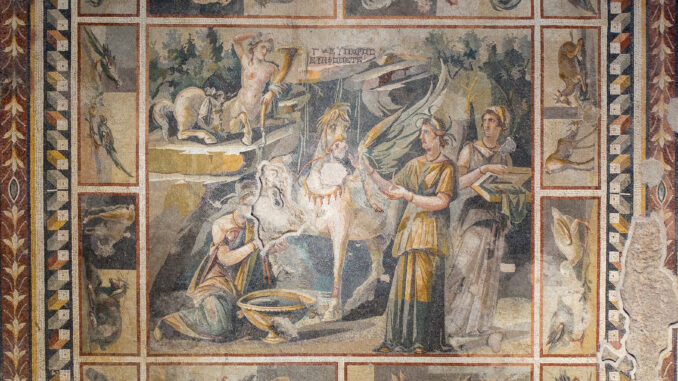
Hood College’s Art & Archaeology Department revised its curriculum to better align with current academic standards and expand student opportunities across its programs.
The department offers four concentrations: archaeology, art history, studio art and art education. Recent updates focused on the studio art and art history concentrations, with the goal of bringing them in line with other four-year institutions in Maryland and the surrounding region.
According to Jennifer Ross, the department chair, the studio art curriculum had not been updated since the early 2000s and the art history curriculum predated her arrival at Hood College in 1999.
A new minor in museum studies has also been introduced to meet student interest and take advantage of the college’s location near a region rich in historical and artistic resources.
“The main goal was to update and strengthen our programs, so they are comparable to other institutions while expanding what students can do,” Ross said. “We also wanted to create new pathways, like the Museum Studies minor, that respond directly to student demand.”
The revised curriculum places an emphasis on hands-on learning, including art-making, student exhibitions, and archaeological fieldwork. The new museum studies minor also requires an internship, giving students direct experience working with art and cultural objects in professional settings.
Students will also see new course offerings. One course, titled “Art Detectives,” explores how artworks move from artists to museums and how ownership and historical context shape collections.
In studio art, the updated curriculum encourages students to explore multiple media instead of focusing on a single discipline. Students will build skills across different forms before developing a final body of work for their senior exhibition.
A course titled “Junior Studio” will allow students to begin working more independently while collaborating with peers and faculty.
The department said the changes reflect broader trends in art education, including an emphasis on visual literacy and flexibility in artistic practice.
“In today’s world, visual literacy is essential,” Ross said. “Our curriculum is designed to help students build those skills over time while also preparing them for real-world careers.”
The museum studies minor also prepares students for careers in museums and archives by combining coursework with internship experience.
Student and faculty feedback played a role in shaping the revised curriculum. New faculty members contributed ideas based on experience from other institutions, while student work in senior exhibitions also influenced changes.
The updated curriculum also emphasizes real-world experiences. Studio art students complete a senior exhibition, while some art history courses include student-designed exhibitions displayed on campus. Archaeology students are encouraged to participate in fieldwork and excavations.
“These experiences help students build their skills and prepare for what comes next after graduation,” Ross said.
##


Be the first to comment