
By Michaiah Varnes//
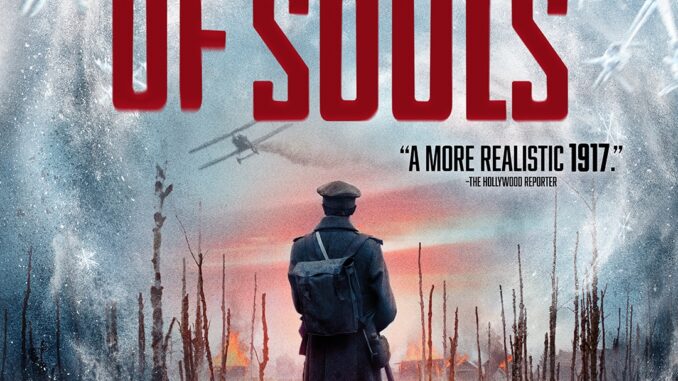
Hood College hosted a film festival in Rosenstock Hall’s Hodson Auditorium featuring “Blizzard of Souls,” a film adaptation of a novel by Aleksandrs Grīns inspired by true events.
The event was organized by the Department of Biology and led by assistant professor Mark K. Chee. It was sponsored by the Graduate School as part of International Education Week.
Keynote speakers included E. Thomas Ewing, professor of history and associate dean for graduate students and research at Virginia Tech, and Daina Eglitis, associate professor of sociology and international affairs at George Washington University.
The audience consisted mainly of Hood students and members of the Frederick community, with additional participants joining through Zoom.
The film follows a 16-year-old boy who joins the Russian Army on the Eastern Front during World War I. He confronts the brutal realities of war as he shifts from fighting for Imperial Russia to supporting the Bolsheviks during the Russian Revolution, ultimately seeking Latvian independence.
At the start of the event, military historian Scott Hileman provided an overview of the Eastern Front, emphasizing its scale and significance. He noted that the front was shaped by diverse nationalities and ideologies that influenced the conflict’s outcome. Hileman, a faculty member at Coastal Carolina University who specializes in modern European and non-Western history, offered attendees a deeper context for the period.
Following the film, the floor opened for audience questions. During the Q&A, an attendee asked how Latvians rebuilt their society after declaring independence. Eglitis responded, and Chee followed up with a question to further explore the topic. Both in-person and Zoom participants took part in the discussion.
Chee said the conversation highlighted how the 1918 influenza pandemic reshaped Eastern Europe during the turmoil following World War I. He noted that the collapse of public health systems during the Russian Revolution and Civil War made it “extremely difficult to understand the pandemic’s true scale.”
He added that these events likely influenced later Soviet public-health policy, “especially considering the USSR ultimately launched the global effort to eradicate smallpox.”
Students also asked about Latvia’s experience during World War I and its subsequent fight for independence.
Chee invited Ewing to discuss the country’s struggles and Eglitis to address themes in the film “Blizzard of Souls.” Chee said he asked Eglitis about the film’s protagonist, Artūrs, and how his journey mirrors Latvia itself, “awakening,” enduring devastation, and rebuilding toward “an uncertain but self-determined future.”
The discussion also touched on Latvia’s post-independence industrial collapse, interwar instability, and long-term demographic challenges, including a population size that “remains roughly what it was in 1915.”
Chee said the film was selected because Baltic cinema “is strong despite the region’s small populations,” and because “Blizzard of Souls” is highly praised in Latvia while remaining accessible to international audiences.
The film offers “a different way to portray war,” he said, one that avoids glorifying combat and rejects a traditional happy ending.
He added that high-quality films about the Eastern Front of World War I are rare, which skews public memory toward the Western Front.
The film also allowed him to highlight the global impact of the 1918 flu pandemic “without needing the disease to appear on screen.”
Chee said he hopes students recognize how historical memory shapes current events. “Not many people remember the 1918 flu,” he said, “but it gave rise to all the seasonal influenza A strains still circulating today.”
He also encouraged students to consider how difficult it is to make an antiwar film that doesn’t unintentionally glorify war, recommending they compare “Blizzard of Souls” with films such as “Joyeux Noël” (2006) and “Gallipoli” (1981).
A panel of experts examined how the Great War contributed to the Russian Revolution and the eventual push for Latvian independence. They also discussed how instability in Russia facilitated the spread of the 1918 influenza pandemic, providing context for Soviet-era public-health policy and modern-day relations between Russia and the Baltic states.
##


Be the first to comment