
By Halle Wilson//
Work is progressing on restoring the Halfway African American Cemetery in Hagerstown.
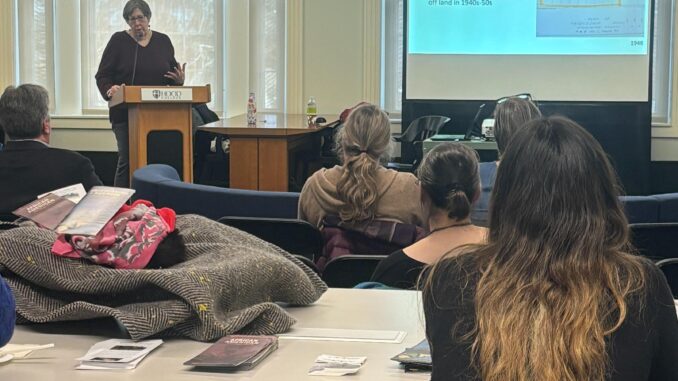
As part of a Hood celebration of Black History Month, Emilie Amt, professor emerita, gave an update Feb. 24, on the work that will occur this spring and summer at the historic cemetery. Clean-up efforts will continue and an imaging company will study the site.
The cemetery on Clinton Avenue in Hagerstown was founded in 1897 and contains the remains of approximately 400 individuals.
The directors of the cemetery sold the property to a housing developer in the middle of the 20th century, and it was largely forgotten.
Today, the cemetery, which is less than an acre, is tucked away behind houses and yards in Hagerstown. Restoration work began in March 2020.
Elizabeth Paul, co-founder and president of the Friends of Halfway African American Cemetery, and Amt, who taught history at Hood from 1998 until 2021, gave an update on their work to preserve the cemetery.
“In 2026, we will be working with Terrasearch to begin groundbreaking penetrating research at the cemetery to help us better understand and preserve this sacred site,” Amt said.
She said the cemetery will also be holding clean-up days this spring.
“To continue making an impact at Hood College, we will also host workdays where professors can bring their students to study the site more deeply and participate in hands-on preservation efforts by addressing the invasive vines that threaten the ground,” she said.
Paul and Amt launched a website, www.halfwayafricanamericancemetery.org , that features a searchable database of people buried at the site, as well as information about their relatives.
Work continues on identifying those who are buried in the cemetery.
“Through dedicated efforts, volunteers are working remotely to identify and connect with the living descendants, ensuring that the stories and families tied to the cemetery are remembered and honored,” Amt said.
Amt recommended that those interested in African American cemeteries view a documentary on Laboring Sons Memorial Grounds in Frederick. It describes the story of an African American cemetery that pre-dates the Civil War but was bulldozed to make a City Park.
##

Be the first to comment